
Health and safety
Construction dust: how to clean it without putting it back in the air
The fine dust left by sanding drywall joints, cutting tile or drilling concrete does not clean up like everyday household dust. A broom or a blast of air lifts it back into the room, where it settles on surfaces you have already cleaned. Here is what Québec’s workplace safety board (CNESST) says about crystalline silica, which methods keep the dust down and what to specify in a post-construction cleaning request.
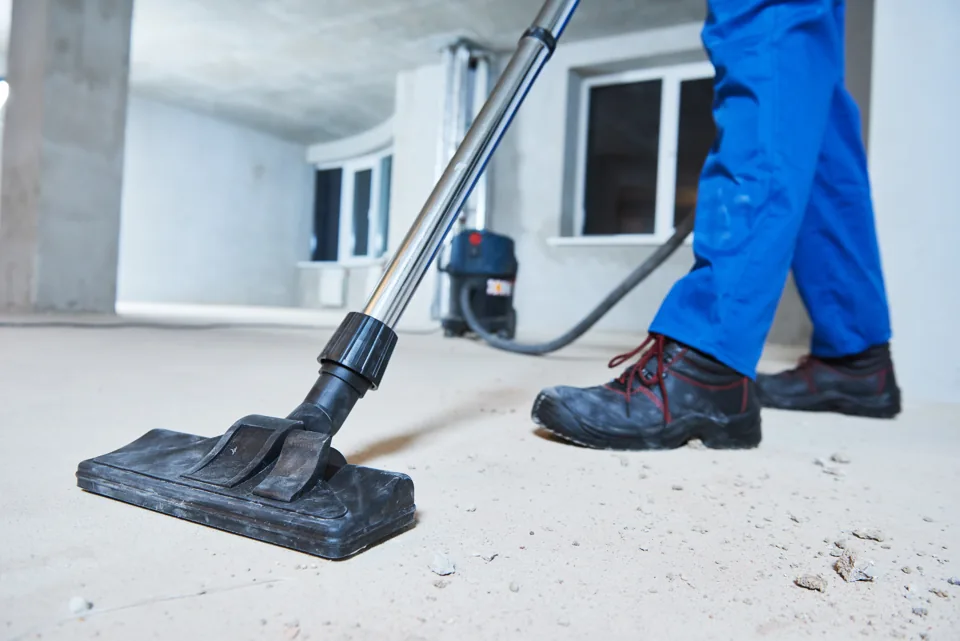
Where does end-of-project dust come from?
Most of it comes from finishing work: sanding drywall joints, cutting tile or stone, drilling and sawing concrete or brick, and cutting wood and panels. The finest particles settle slowly and keep landing after the trades leave, on shelves, trim and light fixtures, in window tracks and in ventilation grilles.
That is why a room that looks clean in the evening can be covered with a grey film the next morning. The final clean has to come after the dust-producing work, not during it.
Crystalline silica: what the CNESST says
According to the CNESST, quartz is the main form of crystalline silica. It is found in brick, mortar, concrete, ceramics and granite, among other materials. Demolition, drilling, sawing, grinding, sanding and dry sweeping of these materials expose people to silica dust.
The CNESST states that this exposure can cause silicosis and, among other diseases, chronic obstructive pulmonary disease and lung cancer. Since April 28, 2024, the workplace exposure value for quartz has been lowered to 0.05 mg/m³.
For cleaning the work area, the CNESST says not to use methods that put dust back into suspension, and to wet silica debris or use an equivalent method that prevents it from spreading. These rules are aimed at employers, but they are a sound benchmark for cleaning a home.
Cleaning methods that keep dust down
Vacuum before you wipe
Work from top to bottom: tops of door frames and cabinets, shelves, light fixtures, baseboards, then floors. A vacuum with a high-efficiency particulate air (HEPA) filter is designed to capture fine particles; the CNESST lists this type of vacuum among the measures required for work on asbestos materials. Ask which equipment will be used in your home.
Wipe damp instead of sweeping
After vacuuming, a slightly damp microfibre cloth picks up what remains without spreading it. Rinse or change cloths often so you are not smearing dust around. Check the manufacturer’s care instructions first for new floors, counters and finishes that do not tolerate water.
Skip the dry broom and compressed air
Dry sweeping and air blowing move dust around instead of removing it. The CNESST lists dry sweeping among the activities that expose people to silica dust.
Ventilation, grilles and filters
If the furnace or air exchanger ran during sanding, dust may have reached the grilles and filters. Ask your contractor whether the vents were covered and whether the furnace or air-exchanger filter should be replaced before you move in. Duct cleaning is a specialized service: list it separately if you need it.
When should you book the final clean?
Wait until sanding, cutting and drilling are finished. A plaster touch-up done after the clean often means redoing the room. If touch-ups are still planned, ask for a first dust-removal pass, then a finishing pass after the last trade, and have the estimate spell out what each pass includes.
Prepare a site for its final clean Cleaning before the pre-acceptance inspection
What to include in your cleaning request
The more your request explains where the dust came from, the more accurate the estimate.
- The work that produced dust (drywall, tile, concrete, wood) and when it finished.
- The rooms affected and those that stayed closed during the work.
- Whether the ventilation ran and whether the vents were covered.
- New finishes that do not tolerate water or certain products.
- Occupied rooms and furniture left in place.
Construction-site cleaning before handover Cleaning after a renovation
What to include in your request
- Dust-producing work and when it finished
- Grilles, filters and rooms closed during the work
- New finishes that do not tolerate water
Frequently asked questions
Is construction dust a health hazard?
According to the CNESST, crystalline silica dust produced when working brick, concrete, ceramics or granite can cause silicosis and other lung diseases. Avoid putting it back in the air: vacuum with a high-efficiency filter, wipe damp, and do not dry sweep or use compressed air.
Can I use a regular vacuum on drywall dust?
For a small touch-up, follow your vacuum manufacturer’s instructions and empty the canister and filters often. For a whole home or floor, ask for a vacuum with a HEPA filter, followed by damp wiping of the surfaces.
How many cleaning passes should I plan for?
It depends on how much dust there is and what work remains. A first pass can remove most of it; a finishing pass after the last touch-ups deals with what has settled since. Have the estimate state the number of passes and what each includes.
Sources
Sources checked on November 25, 2026.